You're paying for more than just gray cement. Here's what actually goes into a concrete project — and why each piece matters.
The Concrete Mix Itself
Concrete is a blend of cement, water, sand, and gravel or crushed stone. The cement and water form a paste; the sand and stone (called aggregate) give it strength and bulk. Too much water makes weak, crack-prone concrete. Too little makes it hard to work with. Good contractors use a mix rated for the job, with higher strength for driveways and foundations. In New Jersey, additives that resist freeze-thaw are important. The right mix is not one-size-fits-all.
Reinforcement: Rebar and Wire Mesh
Concrete is strong when you push on it but weak when you pull or bend it. Reinforcement makes up for that. Rebar (steel bar) gets placed inside thicker slabs and foundations to add tensile strength. Wire mesh does a similar job in flatwork like driveways and patios. Reinforcement doesn't stop every crack, but it holds the concrete together when one forms — keeping a small crack from turning into two separate slabs. Leaving it out is a common shortcut on cheap jobs.
The Base Underneath
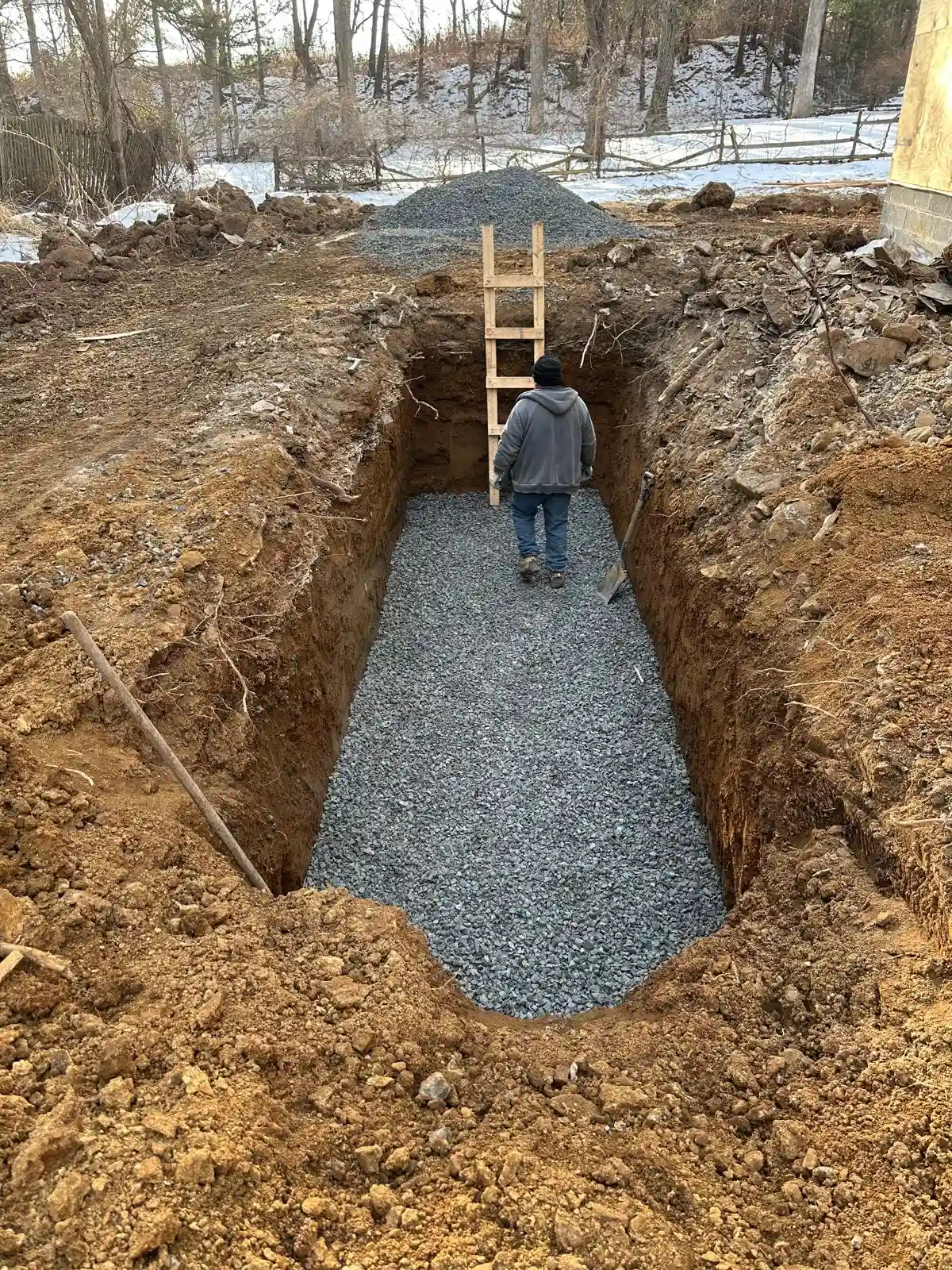
Here's the part nobody sees, and it's the most important. Concrete is only as strong as what's under it. Before pouring, a contractor builds a base of compacted gravel or crushed stone. This spreads the weight and gives water somewhere to drain. If the base is thin, uneven, or poorly compacted, the slab will settle and crack — no matter how good the concrete is. Proper base prep also protects against frost heave in New Jersey winters. It's the step that separates a driveway that lasts decades from one that fails in a few years.
Sealers and Finishes
Once the concrete is poured and cured, sealers and finishes protect it. A sealer keeps out water, oil, and de-icing salt — a big deal in New Jersey where salt and freeze-thaw wear down unsealed concrete. Finishes affect how the surface looks and feels: a broom finish adds grip, while a smooth or stamped finish adds style. Reapplying sealer every couple of years is cheap insurance that extends the life of your concrete.